
FOCUS OF THE MONTH (FOM)
IT’S HARVEST TIME
SCRIPTURE OF THE WEEK (SOW)
Say not ye, There are yet four months, and then cometh harvest? Behold, I say unto you, Lift up your eyes, and look on the fields; for they are white already to harvest. — John 4:35 KJV
Do you not say, ‘There are yet four months, then comes the harvest’? Look, I tell you, lift up your eyes, and see that the fields are white for harvest. — John 4:35 ESV
MINISTRY RESOURCES
Wednesday Corporate Fasting Scripture – Isaiah 58 (ESV); Isaiah 58 (KJV)
Friday End of Week Scripture – Ephesians 3:20-21 (KJV)
LET’S CELEBRATE YOUR NEW YEAR!

ANNOUNCEMENTS
OPEN INVITATION FROM CLASS 7
Please join us whenever your Class Facilitator is absent
1-605-313-4831; access code 259-748#
Did you miss your class today? Do you want an evangelism tool?
If yes — call or share the Class 7 Instant Replay
1-605-313-4904; access code 259-748#
Open Invitation – Intercessory Prayer
Join the Ministry for Intercessory Prayer every 2nd Saturday of each month
1-605-313-5671; access code 563-972#
start time is at 4:45 AM
You Are Welcome To Listen To Class Review Instant Replays
Class 5 – (605) 468-8114; access code 694-591#
Class 6 – (605) 313-4899; access code 943-172#
Class 7 – (605) 313-4904; access code 259-748#
Visit here to submit Prayer Requests
ESV Translation Philosophy
The ESV is an “essentially literal” translation that seeks as far as possible to reproduce the precise wording of the original text and the personal style of each Bible writer. As such, its emphasis is on “word-for-word” correspondence, at the same time taking full account of differences in grammar, syntax, and idiom between current literary English and the original languages. Thus it seeks to be transparent to the original text, letting the reader see as directly as possible the structure and exact force of the original.
In contrast to the ESV, some Bible versions have followed a “thought-for-thought” rather than “word-for-word” translation philosophy, emphasizing “dynamic equivalence” rather than the “essentially literal” meaning of the original. A “thought-for-thought” translation is of necessity more inclined to reflect the interpretive views of the translator and the influences of contemporary culture.
Every translation is at many points a trade-off between literal precision and readability, between “formal equivalence” in expression and “functional equivalence” in communication, and the ESV is no exception. Within this framework, we have sought to be “as literal as possible” while maintaining clarity of expression and literary excellence. Therefore, to the extent that plain English permits and the meaning in each case allows, we have sought to use the same English word for important recurring words in the original; and, as far as grammar and syntax allow, we have rendered Old Testament passages cited in the New in ways that show their correspondence. Thus in each of these areas, as well as throughout the Bible as a whole, we have sought to capture all the echoes and overtones of meaning that are so abundantly present in the original texts.
As an essentially literal translation, taking into account grammar and syntax, the ESV thus seeks to carry over every possible nuance of meaning in the original words of Scripture into our own language. As such, the ESV is ideally suited for in-depth study of the Bible. Indeed, with its commitment to literary excellence, the ESV is equally well suited for public reading and preaching, for private reading and reflection, for both academic and devotional study, and for Scripture memorization.
PRAISE & WORSHIP
DAILY DEVOTIONALS
Sunday, September 7, 2025 – DEPENDENCE ON GOD – Mark 10:13-16
Our Daily Bread Focuses: Christ, person/work; Salvation
Today’s Devotional
“Oh, you look so serious!” I said to my ten-week-old granddaughter Leilani. She was studying my face with a knitted brow as I talked to her. “I’d be serious too,” I continued, “looking at this world. But you know what? Mama loves you, Daddy loves you, and Baba and Papa [our nicknames as grandparents] love you too. But best of all, Jesus loves you! And that means everything!”
Then it happened. Like a cloud letting the sun through, the furrow left her brow and her little face lit up with a smile that melted my heart. Like most grandparents, I’d like to believe she understood me, though that may be a stretch. But perhaps she caught some of the joy behind my words. The simple, innocent joy that shone on her face brought to mind Jesus’ words that we must “receive the kingdom of God like a little child” (Mark 10:15).
Jesus said those words as “people were bringing little children” to Him so He might “place his hands on them” and bless them (vv. 13, 16). But “the disciples rebuked them,” thinking Jesus too busy or important. That troubled Him (vv. 14-15).
Children are naturally humble and dependent. To receive God’s kindness to us in Christ, we too must turn from pride and admit our need for Him in everything. As we do, He exchanges this world’s hopelessness with the promise of life with God forever. And that should make us smile.
Reflect & Pray
In what ways do you need God? How can you declare your dependence on Him today?
Abba Father, please help me to humbly live in Your kindness today and also share it with others.
Learn more about having a personal relationship with God.
Today’s Insights
In Mark 10:13-16, Jesus seized the moment to teach a very crucial lesson about how things function in the sphere of heavenly rule and order. “Let the little children come to me,” He said, “and do not hinder them, for the kingdom of God belongs to such as these” (v. 14). Christ’s illustration and teaching are consistent with the principle stated in the first beatitude: “Blessed are the poor in spirit, for theirs is the kingdom of heaven” (Matthew 5:3).
Bible teacher Kent Hughes offers these words: “What Jesus has in mind here is an objective state that every child who has ever lived, regardless of race, culture, or background, has experienced—helpless dependence. . . . Children of the kingdom enter it helpless, ones for whom everything must be done.” Those who are impoverished in spirit are those who are needy and know it. When we acknowledge our dependence on God, we come to Him with open hands and heart.
Today’s Devotional
When my friend Connor takes pictures on his old film camera, he doesn’t bother to find attractive lighting or airbrush blemishes or crop out anything unsightly. His photos are startlingly raw. They stand out in my social media feed next to heavily edited photos of gorgeous people and places. Though unconventional, his work is beautiful because it communicates truth about how things really are.
We all long for what’s real, but sometimes the truth isn’t attractive to us. Close to the time of His death, Jesus declared, “I am . . . the truth” (John 14:6). His disciples were wondering how they could get to the Father’s house that Jesus spoke so longingly about (vv. 2-3). They failed to see that Jesus standing in front of them was the answer. They struggled to understand that He would bring victory through His own sacrifice.
Isaiah prophesied that the coming Messiah would have no beauty or majesty, “nothing in his appearance that we should desire him” (Isaiah 53:2). Much of what Jesus said was so challenging and unexpected that it turned religious people against Him (John 11:45-48). Yet He gave an open invitation to know the truth and find real life. “If you really know me,” said Jesus, “you will know my Father as well” (John 14:7). In the midst of an airbrushed and unrealistic world, we can embrace that beautiful, raw truth today!
Reflect & Pray
When and why have you sought superficial beauty instead of truth? How can you embrace Jesus’ words more and more?
Dear Jesus, I choose to follow You as the source of all truth.
Watch this video to see how Jesus is the way!
Today’s Insights
In John 13-17, we encounter a scene best viewed with reverence and awe. These chapters contain Christ’s final instructions to His disciples before His arrest and crucifixion. Immediately after Judas had departed to betray Christ, Jesus said, “Now the Son of Man is glorified and God is glorified in him” (13:31). The reality of His violent death for us was the pivot point of Christ’s entire mission. At first, the disciples couldn’t accept this.
The crucifixion brought the rawest truth they would absorb. Yet His death was essential to providing restoration to our heavenly Father. Jesus promised, “My Father’s house has many rooms; if that were not so, would I have told you that I am going there to prepare a place for you?” His words “I will come back and take you to be with me” (14:2-3) convey the culmination of that raw truth—eternal joy with our Father.
Today’s Devotional
Before he was martyred for his steadfast faith in Jesus, an African minister whose name has not been preserved penned “A Martyr’s Prayer.” This profound message from another era has become known as “The Fellowship of the Unashamed.”
This pastor’s words present a challenge to all believers in Jesus—a challenge that echoes the words of the apostle Paul, who wrote in his letter to his young friend Timothy: “Do not be ashamed of the testimony about our Lord” (2 Timothy 1:8) because the Holy Spirit gives us “power, love and self-discipline” (v. 7).
Here, in part, is what that faithful African pastor wrote: “I am part of the fellowship of the unashamed. The decision has been made. I am a disciple of [Jesus] and I won’t back up, let up, slow down, back away, or be still. My past is redeemed. My present makes sense. My future is secure. . . . I live by faith, lean on His presence, walk by patience, lift by prayer, and labor by the Holy Spirit’s power.”
Both Timothy and that pastor faced difficulties we may never experience, but their words challenge us to stand strong when our faith is tested. We can remain unashamed because God “is able to guard what [we] have entrusted to him” (v. 12)—our lives and our future.
Reflect & Pray
What gives you courage to be unashamed for Christ? How can you follow the examples of others who were unashamed of the gospel?
Dear God, You promised that the Holy Spirit gives us power. Please help me to stand up for You and be unashamed in all kinds of situations.
Dive deeper into the wisdom shared in 1 and 2 Timothy.
Today’s Insights
In 2 Timothy 1:6-14, Paul’s advice to Timothy was in no way arrogant, nor was it given flippantly. He wrote out of his own deep suffering. In fact, he was imprisoned at that moment and understood that he’d soon be executed. “The time for my departure is near,” he wrote (2 Timothy 4:6). And yet the apostle was forward-looking. Just as Jesus gave instructions to His disciples the night before His crucifixion, so too
Paul focused on developing the faith and ministry of his younger protégé Timothy, who would carry on the work. “Fan into flame the gift of God,” he urged him (1:6). “Join with me in suffering for the gospel, by the power of God” (v. 8). Paul didn’t fear death because he anticipated “the appearing of our Savior, Christ Jesus, who has destroyed death and has brought life and immortality to light through the gospel” (v. 10). We can also stand strong when our faith is tested.
Today’s Devotional
Anita Bailey’s heart was warmed when she got this social media message about her son Jalen: “I was a greeter today at [church] and a young man with a child in his arms came up to me and put his arms around me. . . . I stared for a second, then I recognized him and said, ‘Jalen!’ We embraced and chatted briefly. What a fine young man!” The greeter knew Jalen in his rebellious days when Anita and her husband, Ed, had felt powerless to save their son from the consequences of his unwise choices, which had resulted in twelve years in prison for him.
Though the Baileys felt powerless, they were not prayerless. And neither was King Jehoshaphat in 2 Chronicles 20. When harassed by a menacing coalition of enemy forces, he called a prayer meeting (vv. 1-4). “Our God, will you not judge them?” he prayed. “For we have no power to face this vast army that is attacking us. We do not know what to do, but our eyes are on you” (v. 12).
Have you ever felt powerless or clueless in the face of circumstances that were out of your control? Why not call a prayer meeting—either alone or with others? That’s what Jesus did in the face of His coming crucifixion (Luke 22:39-44). Prayer space is the sacred place where the petitions of powerless people are offered to our almighty God in the name of Jesus.
Reflect & Pray
What’s keeping you from bringing your challenges to God in prayer? How can you partner with others in prayer for mutual support?
Almighty God of resurrection power, please help me in my powerlessness today as I fix my eyes on Jesus.
Today’s Insights
The temple in Jerusalem is where the Israelites sought God in prayer during national crises (2 Chronicles 6:18-40). When Israel was threatened by a large enemy military coalition, Jehoshaphat assembled the nation at the temple and prayed for God’s help (20:1-12; see 6:34-35). Responding to the people’s faith, God assured them of victory: “Do not be afraid or discouraged . . . . For the battle is not yours, but God’s. . . . Stand firm and see the deliverance the Lord will give you” (20:15, 17). Prayer is where powerless people offer petitions to an almighty God.
Thursday, September 11, 2025 – LAMENTING TO GOD – Lamentations 1:20-22
Daily Bread Focuses: God’s character; Healing; Hope; Suffering
Scriptures: Psalm 121:1-2; Romans 8:18; Exodus 34:14; 1 Peter 1:13
Today’s Devotional
I viewed the opening displays of the 9/11 Memorial & Museum in New York City with curiosity but kept my emotions in check. That changed when we entered the inner exhibit, which the curators have wisely closed off from children and those wanting to shield themselves from the more heartrending images. As I encountered story after story of heartbreak and loss, waves of lament rose within me.
When we witness or remember such destruction and pain, we can join the cries of those who have voiced their distress to God. This includes the words of anguish found in Lamentations, which many scholars believe the prophet Jeremiah wrote after the destruction of Jerusalem. In the tightly formed structure of this poem, he releases his sorrow and grief over the pain of God’s people: “See, Lord, how distressed I am! I am in torment within, and in my heart I am disturbed” (Lamentations 1:20). And yet he looks to God as the ultimate judge, knowing that only He can deal with the sins and destruction: “Let all their wickedness come before you” (v. 22).
This kind of honest crying out to God can help us to grapple with painful atrocities such as what happened on September 11, 2001, or other current-day evil deeds. We look to God for help, hope, comfort, and justice.
Reflect & Pray
When you witness wickedness, how do you keep your heart tender before God? How might He lead you to pray for those who are hurting today?
God of truth and love, I know that Your heart breaks over the pain in the world. Please envelop me in Your grace and mercy and heal my wounds.
Today’s Insights
When we think of lament in the Bible, Jeremiah—known as the weeping prophet—comes to mind (see Jeremiah 9:1). However, he’s not the sole exemplar of lament in the Scriptures. Other examples are Job, David, and Jesus.
In Lamentations 1:20-22, the prophet Jeremiah expresses the rawness and weightiness of lament even in the choice of his words. It’s the consequence of something so powerful or heartbreaking—where something of value has been lost—that it prompts uncommon expression. Jeremiah exclaims, “See, Lord, how distressed I am! I am in torment within, and in my heart I am disturbed” (v. 20). The situation was such that it generated “groaning” (v. 21). Lament is the appropriate language of those who have personally come to grips with their pain and the conditions that caused it. As we grapple with pain, God invites us to express our honest, prayerful, and worshipful lament to Him.
Visit GO.ODB.org/091125 to learn how lament can help us praise God in the midst of loss.
Today’s Devotional
Lap after lap, Katie Ledecky was in a familiar spot during the 1500-meter freestyle race at the 2024 Paris Olympics. For some fifteen minutes, she was far ahead of the rest of the swimmers and alone with her thoughts. What was Ledecky thinking about during the long race? In an interview conducted immediately following her gold-medal-winning performance in which she set a new Olympic record, Ledecky said she was thinking about her training partners and saying their names in her head.
Distance swimmers aren’t the only ones who need to focus their minds on the right things. We as believers in Jesus also need to guard our thoughts throughout our faith journey.
The apostle Paul encouraged the Philippian church to “rejoice in the Lord,” not be “anxious about anything, but pray about everything (Philippians 4:4, 6). The result? “The peace of God, which transcends all understanding, will guard your hearts and your minds in Christ Jesus” (v. 7). Jesus, the Prince of Peace, helps put our worries and troubles in perspective.
Paul also encouraged believers: “Whatever is true, whatever is noble, whatever is right, whatever is pure, whatever is lovely, whatever is admirable—if anything is excellent or praiseworthy—think about such things” (v. 8).
As we go about our day, let’s be aware of our thoughts. When we see God’s hand in our life, we can count our blessings and worship Him.
Reflect & Pray
What have you been thinking about lately? How can you honor God with your thoughts?
Dear God, may my thoughts be pleasing to You.
Today’s Insights
In this “joyful” letter (Philippians 1:4, 25; 2:2, 29; 4:1), Paul challenged believers in Jesus to “rejoice in the Lord always” (4:4). He explains why he’s rejoicing and encourages believers to do the same (1:18; 2:17-18; 3:1; 4:4, 10). When he first visited the Roman colony of Philippi on his second missionary journey about ten years earlier, he’d been falsely accused of disturbing the social peace of the city.
Even though he’d been illegally beaten and unjustly imprisoned (Acts 16:20-24), he was a picture of calmness and peace, “praying and singing hymns to God” (v. 25). In Philippians 4, Paul says not to “worry about anything; instead, pray about everything. Tell God what you need, and thank him for all he has done. . . . Think about things that are excellent and worthy of praise” (vv. 6, 8 nlt). As we focus our thoughts on what God’s done, we can worship Him even in the midst of trials.
Saturday, September 13, 2025 – SEARCHING FOR MERCY – Exodus 16:11-16
Our Daily Bread Focuses: God’s character; God’s love & care; Mercy and justice
Today’s Devotional
Her fans knew her as Nightbirde. Singer-songwriter Jane Kristen Marczewski won a following in 2021 on a popular TV talent show. In 2017, she’d been diagnosed with Stage 3 breast cancer. In 2018, she went into remission. She started touring, but months later the cancer returned, giving her little chance of survival. Amazingly she recovered and was declared cancer-free. But on February 19, 2022, Nightbirde died.
During her difficult journey, she blogged, “I remind myself that I’m praying to the God who let the Israelites stay lost for decades. They begged to arrive . . . but instead He let them wander, answering prayers they didn’t pray. . . . Every morning, He sent them mercy-bread from heaven . . . . I look for the mercy-bread . . . The Israelites called it manna, which means ‘what is it?’ That’s the same question I’m asking . . . . There’s mercy here somewhere—but what is it?”
The exodus story reveals much about God’s mercy. First, His mercy was promised to the Israelites. “You will be filled with bread” (Exodus 16:12). And second, His mercy may surprise us. “They did not know what it was” (v. 15). Mercy often doesn’t look like what we think. But it’s mercy nonetheless. For the Israelites, it looked like morning manna. For Nightbirde, she wrote of the gift of a blanket from a friend, and her mother’s hands.
Reflect & Pray
How has God’s mercy surprised you? What might it mean for you to look for mercy today?
Merciful God, thank You for Your mercy. Please help me search for it.
For further study, read A Child’s Compassion.
Today’s Insights
The desert sojourn (Exodus 16:11-16) and God’s merciful provision of manna became an example or pattern of God’s intention as a royal shepherd to provide for His people (celebrated annually in the Feast of Tabernacles). The Good Shepherd in the Gospels continues to offer divine provision to believers in Jesus in their deserts (Mark 6:32-44), but only at the end of this present age will He wipe away every form of suffering and want for His faithful followers.
Revelation 7 describes this future time: “He who sits on the throne will shelter them with his presence. ‘Never again will they hunger; never again will they thirst. The sun will not beat down on them,’ nor any scorching heat. For the Lamb at the center of the throne will be their shepherd; ‘he will lead them to springs of living water.’ ‘And God will wipe away every tear from their eyes’ ” (vv. 15-17).
Check out how God provides spiritual food in the desert too.
THIS WEEK’S INSPIRATIONAL THOUGHT BY SISTER CLOVIA
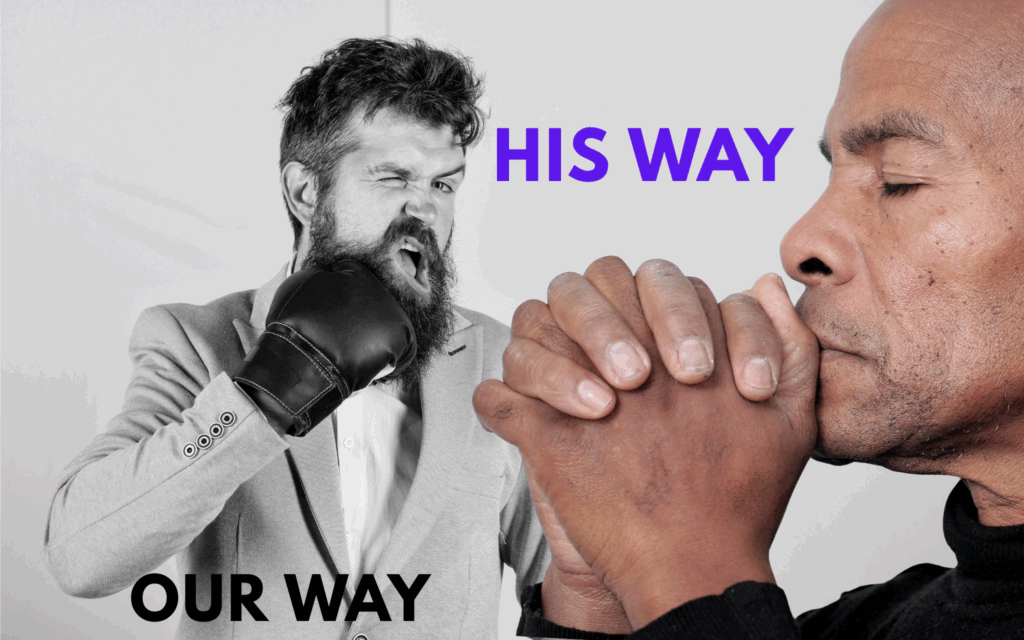
THE BATTLE IS THE LORD’S, NOT YOURS
Are you fighting something today? It may be an emotional, physical, relational, or spiritual battle. Are you weary, discouraged, and in danger of giving up the fight? Do you know that the battle is not yours alone?
Learn how to let go and let God fight your battles.
—God is bigger than any problem you face.
—You can trust God with anything.
—God loves you enough to fight for you.
We need to let go and surrender the fight to God. This means:
—God will usually not fight the battle the way we would.
—God’s timing and techniques often will not make sense to us.
—God will ask us to be still and wait even though everything in us might want to engage in the battle.
“There is no pain Jesus can’t feel
No hurt He cannot heal
All things work according to His perfect will
No matter what you’re going through
Remember God is using you
For the battle is not yours, it’s the Lord’s”
“The Battle Is Not Yours” by Yolanda Adams
“And all this assembly shall know that the LORD saveth not with sword or spear, for the battle is the LORD’s, and he will give you into our hands.” — 1 Samuel 17:47 KJV
CHRISTIAN-BASED MOVIE FOR THE MONTH
***The Daily Devotionals are taken from Our Daily Bread Ministries and the Scriptures are from the BibleGateway.***
-END OF PAGE-