
FOCUS OF THE MONTH (FOM)
CHRIST IS THE WAY TO LIBERTY
SCRIPTURE OF THE WEEK (SOW)
The Spirit of the Lord is upon me, because he hath anointed me to preach the gospel to the poor; he hath sent me to heal the brokenhearted, to preach deliverance to the captives, and recovering of sight to the blind, to set at liberty them that are bruised. — Luke 4:18 KJV
The Spirit of the Lord is upon me, because he has anointed me to proclaim good news to the poor.
He has sent me to proclaim liberty to the captives and recovering of sight to the blind, to set at liberty those who are oppressed, — Luke 4:18 ESV
Wednesday Corporate Fasting Scripture – Isaiah 58 (ESV); Isaiah 58 (KJV)
Friday End of Week Scripture – Ephesians 3:20-21 (KJV)
MEMBER’S BIRTHDAY CELEBRATION

ANNOUNCEMENTS
OPEN INVITATION FROM CLASS 7
Please join us whenever your Class Facilitator is absent
1-605-313-4831; access code 259-748#
Did you miss your class today? Do you want an evangelism tool?
If yes — call or share the Class 7 Instant Replay
1-605-313-4904; access code 259-748#
Open Invitation – Intercessory Prayer
Join the Ministry for Intercessory Prayer every 2nd Saturday of each month
1-605-313-5671; access code 563-972#
start time is at 4:45 AM
You Are Welcome To Listen To Class Review Instant Replays
Class 5 – (605) 468-8114; access code 694-591#
Class 6 – (605) 313-4899; access code 943-172#
Class 7 – (605) 313-4904; access code 259-748#
Visit here to submit Prayer Requests
ESV Translation Philosophy
The ESV is an “essentially literal” translation that seeks as far as possible to reproduce the precise wording of the original text and the personal style of each Bible writer. As such, its emphasis is on “word-for-word” correspondence, at the same time taking full account of differences in grammar, syntax, and idiom between current literary English and the original languages. Thus it seeks to be transparent to the original text, letting the reader see as directly as possible the structure and exact force of the original.
In contrast to the ESV, some Bible versions have followed a “thought-for-thought” rather than “word-for-word” translation philosophy, emphasizing “dynamic equivalence” rather than the “essentially literal” meaning of the original. A “thought-for-thought” translation is of necessity more inclined to reflect the interpretive views of the translator and the influences of contemporary culture.
Every translation is at many points a trade-off between literal precision and readability, between “formal equivalence” in expression and “functional equivalence” in communication, and the ESV is no exception. Within this framework, we have sought to be “as literal as possible” while maintaining clarity of expression and literary excellence. Therefore, to the extent that plain English permits and the meaning in each case allows, we have sought to use the same English word for important recurring words in the original; and, as far as grammar and syntax allow, we have rendered Old Testament passages cited in the New in ways that show their correspondence. Thus in each of these areas, as well as throughout the Bible as a whole, we have sought to capture all the echoes and overtones of meaning that are so abundantly present in the original texts.
As an essentially literal translation, taking into account grammar and syntax, the ESV thus seeks to carry over every possible nuance of meaning in the original words of Scripture into our own language. As such, the ESV is ideally suited for in-depth study of the Bible. Indeed, with its commitment to literary excellence, the ESV is equally well suited for public reading and preaching, for private reading and reflection, for both academic and devotional study, and for Scripture memorization.
PRAISE & WORSHIP
DAILY DEVOTIONALS
Sunday, July 27, 2025 – TEST OF OUR FAITH – 1 Corinthians 4:9-13
Our Daily Bread Focuses: Persecution; Stories of faith; Trust in God
Today’s Devotional
In ad 304, the Roman emperor Maximian victoriously entered the city of Nicomedia. Parades were ordered as the city gathered to thank pagan gods for the victory—everyone except for a church full of people who worshiped only the one true God. Maximian entered the church with an ultimatum: Escape punishment by renouncing faith in Christ. They refused. All were killed when Maximian ordered the church set on fire with the believers inside.
The apostle Paul understood the cost of following Christ. In 1 Corinthians 4, he confronted the believers living in the Greek city of Corinth with his testimony. Paul stated that the apostles had suffered for Jesus and for their sake. They had been “made a spectacle to the whole universe” (v. 9) as they served Christ.
Similarly, the apostle Peter reminded us how Jesus suffered on our behalf. “When they hurled their insults at [Jesus], he did not retaliate,” wrote Peter. “When he suffered, he made no threats. Instead, he entrusted himself to him who judges justly” (1 Peter 2:23).
Still today, believers in Jesus suffer for their faith. Like the Nicomedian believers who willingly chose to suffer for the gospel, may any opposition we face serve to reveal the strength of our faith in Christ. We can entrust our lives to the one “who judges justly.”
Reflect & Pray
When have you felt like retaliating because of unfair treatment for your faith? How will you trust God to be your defense?
Dear Father, whatever I may face today—please help me entrust my life to You, as Jesus did.
Learn from the Bible on how to defend your faith.
Today’s Insights
Paul wrote 1 Corinthians to address specific problems that had arisen in the Corinthian church: criticism of his ministry (chs. 1-4); sexual immorality (ch. 5); lawsuits (ch. 6); marriage, divorce, and singleness (ch. 7); food offered to idols (chs. 8-10); women in ministry and the Lord’s Supper (ch. 11); use of spiritual gifts (chs. 12-14); resurrection (ch. 15); and offerings (ch. 16).
In chapter 4, he deals with the root cause of these problems. The Corinthians’ arrogance, self-importance, and self-sufficiency (vv. 6-13) had caused division in the church. Paul deliberately and confidently uses himself as an example to show how they could live a Christlike life of simplicity, transparency, integrity, and humility. And our ultimate example is the humility that Jesus showed even in suffering (see 1 Peter 2:23). He’s also our true defense when we suffer for Him.
Today’s Devotional
“Sometimes in life we see things that we can’t unsee,” Alexander McLean told a 60 Minutes interviewer. The South Londoner was eighteen when he went to Uganda to assist in prison and hospice work. That’s where he saw something he couldn’t unsee—an old man lying helpless next to a toilet. For five days McLean cared for him. Then the man died.
The experience ignited a passion in McLean. He earned his law degree and returned to Africa to help the marginalized. Eventually he founded Justice Defenders, an organization that advocates for prisoners.
Many people live in conditions we couldn’t “unsee” if we were to see them. But we don’t see them. In his lament for his devastated homeland, the prophet Jeremiah poured out his heart over his sense of being unseen. “Is it nothing to you, all you who pass by?” he cried. “Look around and see. Is any suffering like my suffering?” (Lamentations 1:12).
Jeremiah’s heart ached not only for himself but for all the oppressed as well. “To crush underfoot all prisoners in the land, to deny people their rights . . . would not the Lord see such things?” he asked rhetorically (3:34-36). Yet he saw hope. “No one is cast off by the Lord forever,” he said. “You, Lord, took up my case; you redeemed my life” (vv. 31, 58).
The “unseen” are all around us. God, who has redeemed us, calls us to see and serve them as He enables us.
Reflect & Pray
Who are the “unseen” near you? How will you see them? What will you do?
Father, please give me eyes to see people in need and help me show them Your love.
Learn to have a selfless heart by checking out this video.
Today’s Insights
In Lamentations 3:36, the word see is the much-used Hebrew word raʼah (“see,” “perceive,” “have vision”). It also appears three times in Genesis 16:13, where God sees and cares for Hagar when she fled from Sarah: “She gave this name to the Lord who spoke to her: ‘You are the God who sees me,’ for she said, ‘I have now seen the One who sees me.” In verse 14 we read, “the well was called Beer Lahai Roi.” Beer Lahai Roi literally means, “the well that belongs to the living One seeing me.” We can ask the God who “sees” to help us see people in need.
Today’s Devotional
My family and I brought my dad home from the hospital. He had a degenerative disease, and we were now adjusting to the new twenty-four-hour medical routines of his suddenly becoming bedridden and requiring a feeding tube. I was also planning for my mom’s gastric procedure and dealing with demanding clients at work. Feeling overwhelmed, I sought privacy in the bathroom one day and cried out to God: Help me, Father. Please give me strength to get through the days ahead.
David also felt overwhelmed by troubles (Psalm 55:2-5). Attacked by his son Absalom, betrayed by his close friend, and helpless over the ensuing violence in Jerusalem, David said, “Fear and trembling have beset me” (v. 5).
But David chose to trust God (v. 23). He believed “[God] will never let the righteous be shaken” (v. 22). Years of trusting the Almighty had taught David that although troubles may unsteady us, those who place their faith in God will never be irrevocably lost and hopeless. “They will never fall, for the Lord holds them by the hand” (37:24 nlt). David knew God would support him with His strength and wisdom: “I call to God, and the Lord saves me” (55:16).
Fourteen years later, we continue to care for my dad at home. The years have taught me that when we cast our cares on Him, He sustains us (v. 22). God bears our burdens, and He bears us up too.
Reflect & Pray
How does God remind you He won’t let you be shaken? How can you entrust your troubles to Him?
Dear God, thank You for helping me walk through the days ahead.
Today’s Insights
The Bible repeatedly assures us of God’s care. In Psalm 55, David urges, “Cast your cares on the Lord and he will sustain you” (v. 22). Later, the prophet Nahum writes, “The Lord is good, a refuge in times of trouble. He cares for those who trust in him” (Nahum 1:7). Centuries later, Peter pens similar words: “Cast all your anxiety on him because he cares for you” (1 Peter 5:7).
How do we know God cares for us? The Bible tells us He’s a “compassionate and gracious God, slow to anger, abounding in love and faithfulness” (Exodus 34:6; Psalm 86:15). He loved us so much that Christ died for us—providing help and care for us now and the hope of eternity with Him (John 3:16; 1 Thessalonians 5:10).
Today’s Devotional
“Who can you call at midnight when everything has gone wrong?” This question shook me when I first heard it years ago. How many of my friendships were strong enough that I could impose on them in my hour of need? I wasn’t sure.
Scripture has much to say about friendship, describing a friend as someone who keeps confidences (Proverbs 11:13; 16:28), shares advice (27:9), and respects boundaries (25:17). But perhaps no one defined friendship more powerfully than Jesus. While to advertisers we are markets and to employers we are staff, to Him, the Master of all, we are “friends” (John 15:15). Jesus described His kind of friendship as being built on shared love of God and personal sacrifice (vv. 13, 15)—something He Himself modeled and called us to pass on (v. 12).
A couple of years after hearing that question, my wife and I suffered a significant loss. Darren, one of the few who knew what happened, traveled two hours to see me, listen to my anger and pain, and pray for me. Darren is a busy man who had plenty of other things to do with his day. But he followed Jesus’ example of sacrificial friendship. I really did have someone in my hour of need.
The question now is whether others have a “friend at midnight” in me. For there are few better ways to make more friends than to be one.
Reflect & Pray
Who can you call at midnight when everything has gone wrong? Why is it important to be there for others in their hour of need?
Dear Jesus, please help me offer to others the kind of friendship You modeled.
Today’s Insights
In the early days of creation, God said, “It is not good for the man to be alone” (Genesis 2:18). These words reveal how foundational relationship and community are to the essence of being human. While the immediate context is the marriage relationship, we’re called throughout Scripture to be in relationship with those around us.
Jesus said in today’s text to “love each other as I have loved you” (John 15:12). And Paul encourages believers in Christ to “bear with each other,” to be patient and forgive the shortcomings of others (Colossians 3:12-13). Being a “friend at midnight” means helping those who’ve been given a heavy burden to carry.
Thursday, July 31, 2025 – LOOKING LIKE CHRIST – Matthew 5:1-10
Daily Bread Focuses: Beatitudes; Living like Christ
Scriptures: 1 John 2:6; Philippians 2:5; Hebrews 12:14
Today’s Devotional
As a child of the 1950s and ’60s, I grew up in the era when “America’s pastime” was baseball. I couldn’t wait to go to the park and play ball, and one of my greatest thrills was when I received my baseball jersey emblazoned with our team’s name—GIANTS! Though the number 9 on the back distinguished me from the others, the common uniform identified us as being on the same team.
In Matthew 5:3-10, known as the Beatitudes, Jesus identifies those who belong to the kingdom of heaven as those who “wear the jersey” of Christlikeness. The kingdom of heaven is comprised of those who assume the posture and character of their king. According to Jesus, “blessed” persons aren’t characterized by external appearance, health, or possessions. Rather, it’s the inside or heart of a person that counts. “Blessed are the poor in spirit” (v. 3)—the humble—those who are spiritually needy and know it. “Blessed are those who hunger and thirst for righteousness” (v. 6)—those whose soul’s yearning is to please and honor God. “Blessed are the peacemakers” (v. 9)—those who join Jesus in the pursuit of harmony.
As the Spirit helps us, we can put on the garment of Christlikeness, which identifies us as believers in Jesus and members of His team. As such, we’re blessed indeed!
Reflect & Pray
According to the Beatitudes, how “well-dressed” are you? What aspect of Christlikeness are you praying for?
Heavenly Father, thank You for my status as a citizen in the kingdom of heaven. Please give me grace each day by the Spirit to look like Christ.
Today’s Insights
The Sermon on the Mount (Matthew 5-7) is Jesus’ great kingdom sermon, describing what makes life in His kingdom different from life in this fallen world. While the world is marked by selfishness, self-promotion, and self-gratification, the kingdom of God is characterized by selflessness and self-sacrifice. Beginning with the Beatitudes (5:3-12), that tone is set immediately—with the remaining exposition explaining how those big ideas are lived out. For example, the statement, “Blessed are the merciful” (v. 7) echoes forth with the instructions Christ gives on loving our enemies (vv. 43-48).
Additionally “Blessed are those who hunger and thirst for righteousness” (v. 6) finds connection in Matthew 6:33, where we’re challenged to “seek first his kingdom and his righteousness.” As we read the Sermon on the Mount, the Holy Spirit can help us see connections that point back to the principles set forth in the Beatitudes and lead us to better reflect the ways of Christ.
Visit ODBU.org/learning-library/the-poor-in-spirit-the-beatitudes-of-jesus/ to examine the Beatitudes with Dr. Craig Blomberg.
Today’s Devotional
In Charles Dickens’ classic novel Oliver Twist, the sickly Oliver is born in a workhouse, an institution notorious for exploiting the poor. Orphaned at birth, the boy eventually runs away due to abusive treatment. Through an amazing set of “twists,” he learns he is heir to a sizable fortune. Dickens, who loved happy endings, ensured that everyone who harmed Oliver over the years either received justice or repented. His oppressors got what they deserved while Oliver “inherited the land.” If only life came with tidy endings like those scripted in a Dickens novel.
In the Bible, we read the song lyrics by a man who anticipated such a day—when justice is served and the oppressed “inherit the land” (Psalm 37:9). Though he experienced evil firsthand, the poet David urged patience. “Be still before the Lord and wait patiently for him,” he wrote. “Do not fret when people succeed in their ways, when they carry out their wicked schemes” (v. 7). He continued, “Those who are evil will be destroyed, but those who hope in the Lord will inherit the land” (v. 9). Despite observing how the “wicked draw the sword” to “bring down the poor and needy” (v. 14), David trusted God to make things right (v. 15).
Life is hard and often unfair. Yet we hear in the words of Jesus an echo from Psalm 37: “Blessed are the meek,” He said, “for they shall inherit the earth” (Matthew 5:5).
Reflect & Pray
When have you been treated badly? How will you trust God in your unfair situations?
Dear God, please help me wait patiently for You to make things right.
For further study, read When Pain Won’t Go Away
Today’s Insights
Israel had limited information about the afterlife, so they sought to explain how injustices in the world could be made right. Their conclusion? God blesses the righteous according to their righteousness and judges the wicked according to their wickedness. Psalm 34 explains the concept, Psalm 37 gives third-party counsel to one suffering injustice, and in Psalm 73, the psalmist Asaph questions this law because he’s the righteous sufferer. In reality, however, it’s only in the next life where injustices will finally be resolved. Asaph realized this when he entered the place of worship and put it all at God’s feet (73:16-28). Today, God provides what we need to patiently wait for His restoration of the world.
Saturday, August 2, 2025 – THE FAMILY OF GOD – Romans 8:9-17
Our Daily Bread Focuses: Family of God
Today’s Devotional
It was 1863. Edwin stood on a railroad platform in Jersey City. He watched as a young man was forced by crowds against a train car. The man dangerously fell into the crevice between the train and the platform. The train started to move. Edwin reached down and, at the last minute, pulled the man to safety.
The saved man was Robert Todd Lincoln, son of President Abraham Lincoln. Robert later wrote that his rescuer’s “face was of course well known to me,” because Edwin Booth was a famous actor. In fact, he was the brother of another actor—John Wilkes Booth—who would assassinate the president two years later.
This historical oddity illustrates a reality for us. We don’t choose the family we’re born into. Perhaps our siblings or parents made wrong choices. Maybe we’re the ones who’ve made a mess of everything. But the Bible tells of God’s family plan: “those who are led by the Spirit of God are the children of God” (Romans 8:14). As His children, “we are [his] heirs” (v. 17). Amazingly, we’re invited to call Him “Abba, Father” (v. 15).
We may long wrestle with the dysfunctions of our earthly family. But we can take comfort that God has changed our spiritual heritage. He adopts us into His family. Most precious of all—He invites us to call Him our Father.
Reflect & Pray
What does it mean to you to be part of God’s family? How does it compel you to live differently?
Abba Father, thank You for adopting me as Your child into Your family.
Today’s Insights
Paul describes believers in Jesus as being “children of God” (Romans 8:14). We’ve received “adoption to sonship” (v. 15) and no longer live as fearful slaves. To call God the Father “Abba” describes the family relationship and the boldness that believers can have when they approach Him.
The word sonship is important because it implies inheritance. Paul isn’t erasing daughters but instead showing that all believers are now “heirs of God” (v. 17). Through the Spirit, believers stand next to Jesus as full “co-heirs.” The adopted children of God have the same full rights as the Son, and the Spirit seals that privileged status (v. 15).
THIS WEEK’S INSPIRATIONAL THOUGHT BY SISTER CLOVIA
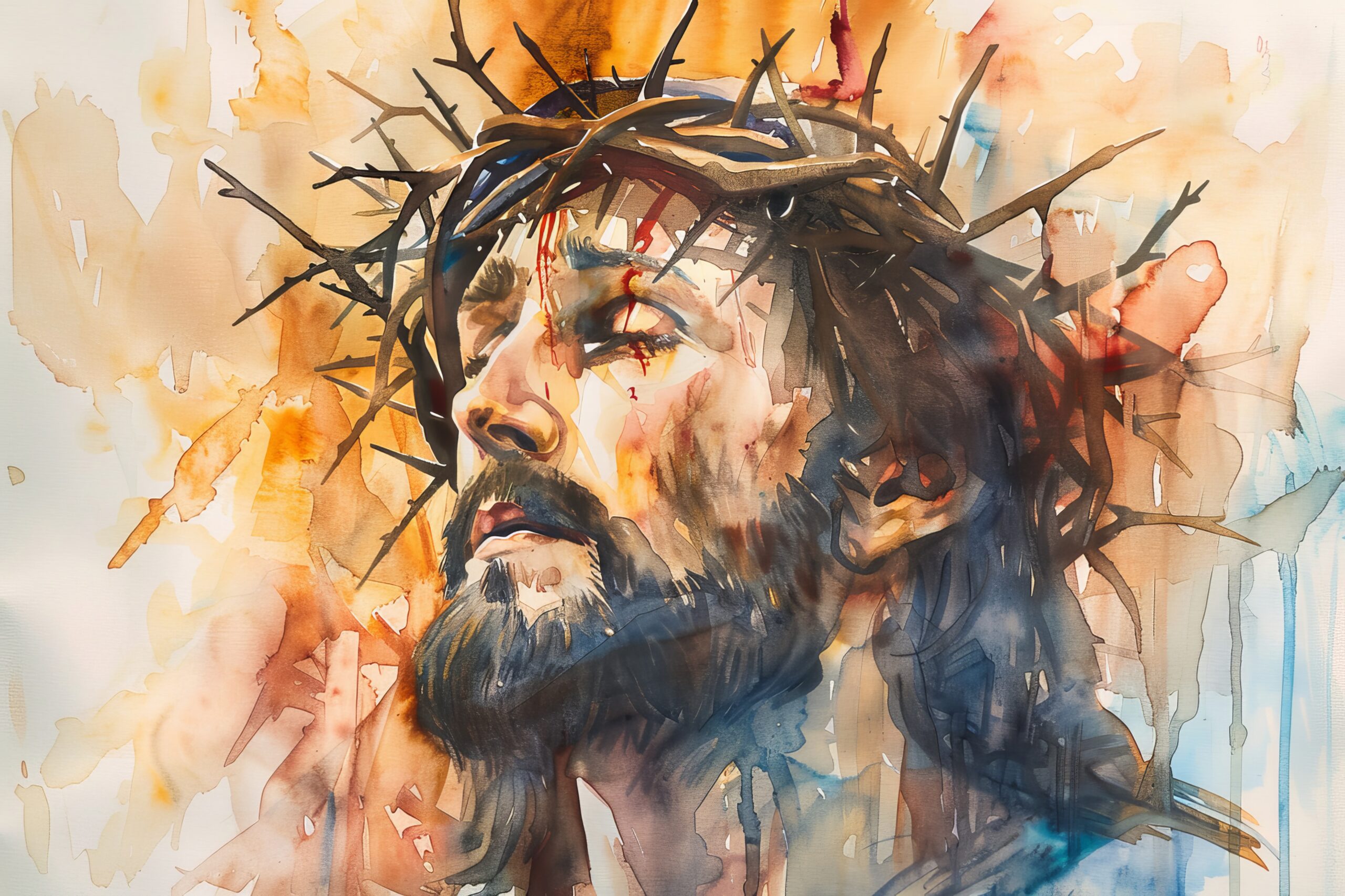
LIFE IS NOT A BED OF ROSES
Life, with all its twists and turns, is often likened to a journey full of challenges. The phrase “Life is not a bed of roses” suggests that life is not always smooth and comfortable, but instead, it is filled with thorns and obstacles that require resilience and perseverance to overcome.
When life presents you with its thorns and obstacles, don’t be overwhelmed by them. No problem is bigger than your God. No matter the hardships life may bring, do the best you can with what you’ve got and let God handle the rest.
We must learn to trust God amid our storms and have faith that we will be delivered. No matter what the circumstance, don’t lose hope. God will not give you more than you can bear; he is with you in your suffering. He will supply all your needs, even when it doesn’t look like it or even when you think life is not fair.
“Blessed is the man that endureth temptation, for when he is tried, he shall receive the crown of life which the Lord hath promised to them that love him.” (James 1:12 KJV)
When life is not a bed of roses, remember who wore the thorns for us.
CHRISTIAN-BASED MOVIE OF THE MONTH
***The Daily Devotionals are taken from Our Daily Bread Ministries and the Scriptures are from the BibleGateway.***
-END OF PAGE-